Reviewing Cute Sea Creatures Vector Art for Embroidery
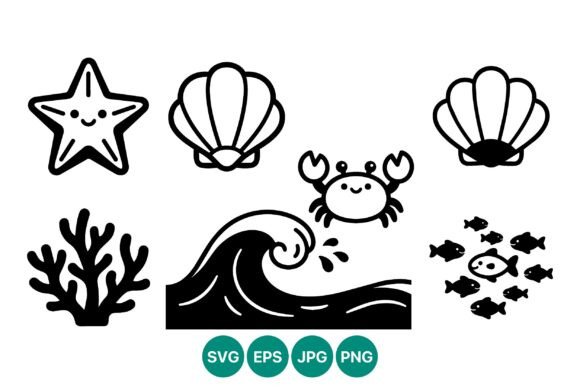
As a designer who spends half my life staring at stitch simulations and the other half untangling thread nests, I have learned that not every pretty graphic translates well to fabric. When I first opened the Cute Sea Creatures Vector Art package, my immediate reaction was one of cautious optimism. The preview showed a charming collection of black and white line art featuring a smiling starfish, a cheerful crab, seashells, coral, a stylized wave, and a school of fish. It looked clean, simple, and undeniably cute. But charm alone does not make a viable machine embroidery design. I needed to know if these Illustrations would hold up under the needle.
I decided to test this asset by planning a real-world project: a custom embroidered tote bag for a local beachside boutique. This scenario is common for many Etsy sellers and craft business owners. The client wanted something whimsical yet professional, suitable for a personalized gift or a small shop product. Here is my practical breakdown of how Cute Sea Creatures Vector Art performs when moved from screen to stitch.
First Impressions and Visual Personality
The mood of this collection is light-hearted and approachable. The cartoon style avoids excessive detail, which is often a blessing in embroidery. Complex gradients and tiny text rarely survive the stitching process, but these bold, simple shapes suggest they were designed with clarity in mind. The visual personality is friendly, making it an excellent candidate for baby embroidery, nursery decor, or casual custom apparel.
However, because the source files are described as black and white line art vectors within a ZIP folder, there is a crucial step missing for the average embroiderer: digitization. Unless this package includes pre-digitized embroidery files (such as PES, DST, or JEF), you cannot simply load these graphics into your machine. If these are indeed just Graphics for manual digitizing or print-on-demand use, that changes the workflow entirely. For the purpose of this review, I am assuming these vectors serve as the blueprint for creating a digital embroidery file or are already accompanied by compatible stitch files. If you are buying this strictly as vector art, remember that you will need to convert these lines into satin stitches, fill stitches, or running stitches yourself.
Real-World Application: The Tote Bag Test
For my tote bag project, I selected the crab and the wave elements. The goal was to create a balanced composition on a canvas bag. Canvas has a distinct fabric texture that can swallow fine details. Fortunately, the thick lines of the Cute Sea Creatures Vector Art stood up well to the weave. I opted for a classic satin stitch border around the crab to give it definition, while using a lighter fill stitch for the body to keep the design from becoming too stiff.
This design shines in applications where visibility is key. It works beautifully on:
- Sweatshirt embroidery: The bold outlines pop against fleece or cotton blends.
- Embroidered patch creation: The self-contained shapes are perfect for iron-on or sew-on patches.
- Holiday embroidery: The sea theme fits perfectly for summer vacations or coastal-themed Christmas gifts.
- Tote bag design: As tested, the simplicity allows for quick stitching on larger surfaces.
When considering commercial embroidery projects, speed and reliability are paramount. A design that requires constant thread breaks or trimming kills profit margins. The open spaces in the coral and fish designs suggest lower stitch density, which is ideal for faster production runs on items like aprons or kitchen towels.
Navigating Fabric and Hoop Constraints
While the design is versatile, it is not without its limitations. I would advise caution when using the smaller elements, such as the tiny fish or detailed seashells, on stretchy fabrics like jersey knits. Without a proper stabilizer, these small shapes can pucker or distort. Always test on scrap fabric first. I recommend using a cut-away stabilizer for garments that will be washed frequently, ensuring the finished product maintains its shape.
Another critical factor is hoop size. If you are working with a small 4x4 inch hoop, you may need to isolate individual creatures rather than attempting to stitch the entire school of fish at once. Grouping too many elements can lead to registration issues, where the colors do not align perfectly. For curved surfaces like caps or hats, the flat nature of these vector illustrations might require significant adjustment in the digitizing phase to account for the curvature. A design that looks flat on screen can look warped on a cap if not properly compensated.
Dark fabrics present another challenge. Since the original art is black and white line art, you must carefully select your thread colors. A dark navy thread on a black shirt will vanish. I suggest using high-contrast colors, such as white or bright teal, to ensure the smiling starfish and crab remain visible. Testing your design in black and white mockups before stitching can help you verify contrast levels.
Commercial Viability and Brand Consistency
For small business owners and handmade product creators, consistency is key to building trust. The Cute Sea Creatures Vector Art offers a cohesive look that can help establish a recognizable brand aesthetic. Whether you are selling printable mockup previews online or physical design assets, the clean lines convey professionalism.
However, before listing any personalized gift or custom apparel for sale, you must confirm the licensing terms. Does the download include commercial rights? Can you sell the stitched items, or just the digital files? Many designers overlook this step, leading to legal issues down the line. Always read the license agreement included in the ZIP folder. If it is unclear, contact the creator. Protecting your craft business is just as important as choosing the right thread.
Final Verdict for Designers
In conclusion, Cute Sea Creatures Vector Art is a strong contender for projects requiring a playful, clean aesthetic. Its strength lies in its simplicity, which translates well to various embroidery techniques. It is particularly suited for baby clothes, casual wear, and home decor items like pillow covers. However, success depends on proper preparation. Check your file formats, respect the limitations of your hoop size, and always prioritize high-quality stabilization.
If you are an Etsy seller looking to expand your summer collection, or a hobbyist wanting to add some ocean flair to your next embroidery project, this collection provides a solid foundation. Just remember: the vector is only the beginning. The magic happens when you translate those lines into thread, paying attention to tension, density, and fabric choice. With careful execution, these sea creatures can swim their way into the hearts of your customers.