Review: Don’t Be Trashy Earth Day Design for Embroidery
As a designer who spends half my life digitizing and the other half stitching, I have learned that not every graphic translates well to thread. When I first pulled up the Don t Be Trashy Earth Day T-Shirt design file, my initial reaction was cautious optimism. The concept is timely, tapping into the growing demand for sustainable messaging, but the execution in embroidery requires a keen eye for detail. This isn’t just about slapping a logo on a shirt; it is about creating a handmade product that feels premium and intentional.
First Impressions and Visual Personality
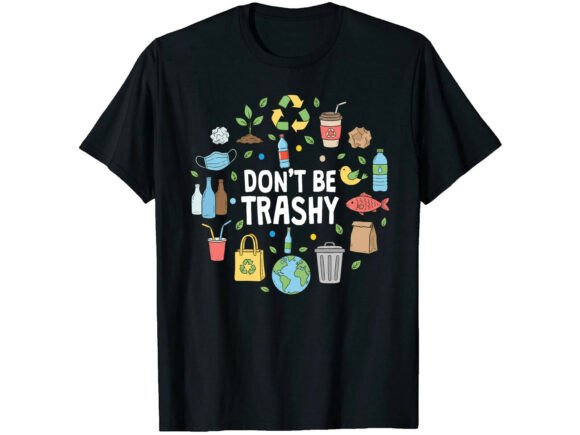
The mood of this design is playful yet urgent. It balances humor with a serious environmental message, which is a tricky tightrope to walk in visual communication. For an embroidery project, the layout appears clean, avoiding the clutter that often plagues digital T-Shirt Designs. The visual personality suggests a modern, eco-conscious aesthetic that appeals to teachers, activists, and parents alike. However, as a reviewer, I look past the screen image. I ask myself: how will those curves hold up under a needle? How will the negative space breathe once the fabric pulls slightly during hooping?
In terms of Graphics, the design relies on strong outlines and potentially solid fills. This is good news for durability but presents challenges for stitch density. If the original artwork has large solid areas, they may need to be broken up with running stitches or lighter fill patterns to prevent puckering, especially on lighter fabrics.
Real-World Application: The Tote Bag Test
To truly evaluate this design, I imagined a specific real-life scenario: preparing a custom order for a local zero-waste shop. The client wanted branded tote bag design options for their upcoming Earth Day sale. I selected a heavy canvas tote, knowing it could support a denser stitch count without distortion.
Stitching the Don t Be Trashy Earth Day T-Shirt motif onto canvas revealed its strengths. The bold lines stood out clearly against the textured weave. The design did not get lost in the fabric grain, which is a common pitfall for intricate machine embroidery design files. Customers reacting to the finished product were drawn to the wit of the phrase combined with the tactile quality of the thread. It elevated a simple bag into a statement piece, proving that the right embroidery file can significantly boost perceived value.
Versatility Across Product Lines
Beyond totes, this design shows promise in several other categories. For sweatshirt embroidery, the design’s scale works well on the left chest or as a larger back piece. The softness of fleece pairs nicely with satin stitches, provided the density is managed. For baby embroidery, such as organic cotton onesies, I would recommend scaling down the design and using softer threads to maintain comfort. It also serves as an excellent embroidered patch idea, where the edges can be finished with a dense satin border for a professional look.
For Etsy seller accounts and small shop owners, this design fits seamlessly into seasonal collections. It works for holiday embroidery campaigns in April, but its message is evergreen enough for year-round sales. Whether used for custom apparel or home decor like pillow covers, the theme resonates with a specific, loyal demographic.
Technical Considerations and Fabric Challenges
While the design is strong, it demands respect for technical limitations. Here is where practical judgment comes into play.
- Fabric Texture: On highly textured fabrics like terry cloth or rough linen, fine details may disappear. This design is best suited for smooth to medium-texture materials.
- Stretchy Fabric: If applying this to a fitted t-shirt, a cut-away stabilizer is non-negotiable. The design’s structure needs support to prevent distortion after washing.
- Dark Fabric: If stitching on black or navy, ensure your thread colors have high contrast. A test run is essential to see if the earth tones pop or muddy together.
- Small Hoop Sizes: Check the dimensions before hooping. If the design includes small text elements, they may become illegible if scaled down too far for a 4x4 hoop.
I also noticed that certain corners in the graphic might benefit from additional tie-down stitches. In a commercial embroidery setting, speed is money, but quality is reputation. Taking the time to add manual stops or adjust the pathing can save you from thread breaks and retractions.
Enhancing Brand Value and Customer Trust
Using a well-executed design like Don t Be Trashy Earth Day T-Shirt does more than just decorate a garment; it builds brand consistency. For boutique branding, the crispness of embroidered thread signals quality that printed vinyl cannot match. It enhances the finished product by adding depth and shadow, making the item feel luxurious.
For craft business owners, this design aids in buyer engagement. Shoppers love seeing the texture of thread in photos. Creating printable mockup images or high-resolution photos of the stitched result can drive sales. It shows that you care about the details, fostering customer trust. When a buyer receives a personalized gift or a carefully crafted item, the tactile experience reinforces their decision to support a small maker.
Practical Designer Notes for Success
Before you load this into your machine, follow these steps to ensure success:
- Test on Scrap Fabric: Always stitch out a sample on the same type of fabric you intend to use for the final product. This reveals any tension issues or density problems.
- Check Thread Contrast: View your design in black and white on your screen. If the elements blend together, adjust your thread palette for better separation.
- Review Stitch Density: If the design feels stiff after stitching, consider reducing the fill density or switching to a lighter fill pattern in your digitizing software.
- Confirm Licensing: Before selling items made with this digital embroidery file, verify the license terms. Ensure you have the rights for commercial use if you are an Etsy seller or running a small shop.
- Use Proper Stabilizer: Match your stabilizer to your fabric. Tear-away for stable woven fabrics, cut-away for knits, and water-soluble for delicate or pile fabrics.
In conclusion, the Don t Be Trashy Earth Day T-Shirt design is a robust asset for any designer’s library. It offers a blend of humor and advocacy that performs well when treated with technical care. By understanding its behavior on different fabrics and respecting the limits of your machine, you can turn this design asset into a best-selling item for your store. It is not just a graphic; it is a tool for creating meaningful, tangible connections with your customers through the art of embroidery.